
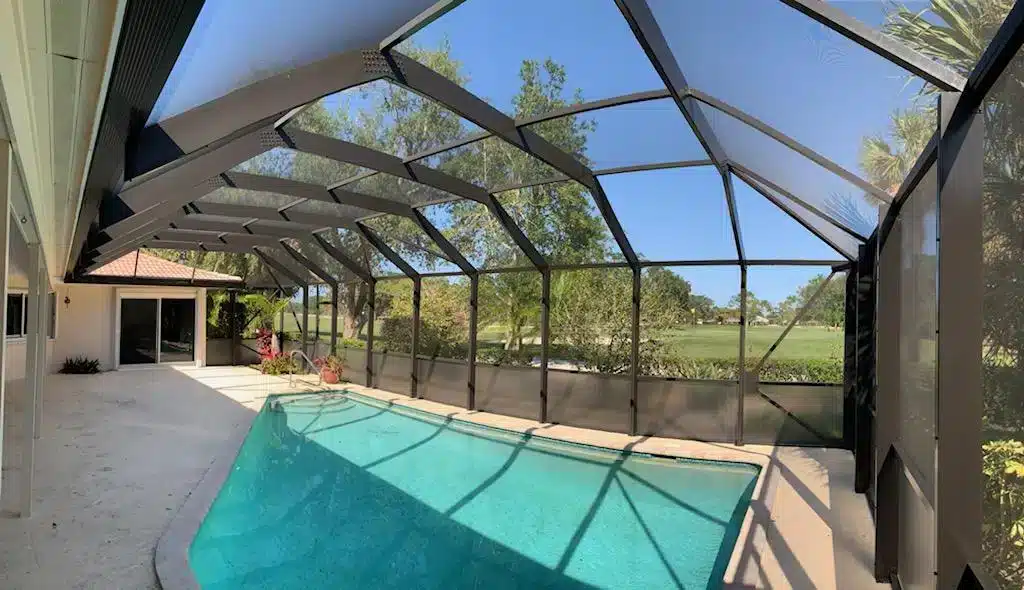
In the Sunshine State, our outdoor living spaces are often the crown jewels of our homes. However, the very elements that make Florida beautiful—the intense tropical sun, the heavy summer rains, and the salty Atlantic breeze—are the primary enemies of aluminum structures. Over time, a once-sleek bronze or white pool cage begins to fade, oxidize, and “chalk.” The fasteners rust, leaving unsightly orange streaks, and the mesh becomes brittle and prone to tearing.
For many homeowners in West Palm Beach, Boca Raton, and Fort Lauderdale, the first instinct is to assume the structure is beyond repair. But before you commit to a $20,000+ replacement, you need to understand the power of professional pool cage restoration. In 2026, advancements in electrostatic painting and high-performance fasteners have made it possible to restore an aging enclosure to 100% of its original beauty for a fraction of the cost. This guide will walk you through the restoration process, the materials involved, and how to decide if your enclosure is a candidate for a total makeover.
What is Screen Enclosure Restoration?
It is important to distinguish between a simple “rescreen” and a “restoration.” A rescreen is a maintenance task where only the mesh is replaced. A restoration, however, is a comprehensive structural and aesthetic overhaul. At AAA Pro Screening, our restoration process treats the aluminum frame like the chassis of a classic car—stripping away the old and rebuilding it for the future.

The Anatomy of a Full Restoration
A professional-grade restoration involves four critical phases:
Preparation & Cleaning: Using specialized pressure washing and eco-friendly deglossers to remove oxidation and “chalking” from the aluminum.
Hardware Overhaul: Removing every structural screw and replacing them with high-grade, corrosion-resistant fasteners.
Electrostatic Painting: The “magic” of the process, where a specialized paint system is used to bond a new finish to the metal.
Premium Rescreening: Installing new mesh using high-quality spline to ensure the screen stays drum-tight for years.
The Science of Electrostatic Painting
The centerpiece of any restoration is the paint. You cannot simply use a brush or a standard spray gun on aluminum and expect it to last in the Florida heat. Standard paint will peel and flake within a year. Instead, we use Electrostatic Painting.
How the "Magnetic" Bond Works
During this process, the paint particles are given a positive electrical charge, while the aluminum frame is grounded. As the paint is sprayed, it is physically attracted to the metal. This creates a “wrap-around” effect, ensuring that the back of the beams and hard-to-reach corners receive an even coat.
Zero Overspray: Because the paint is magnetically pulled to the metal, there is almost no mess, protecting your pool deck and landscaping.
Factory Finish: The result is a smooth, hard finish that is indistinguishable from a brand-new aluminum extrusion.
UV Resistance: We use specialized architectural coatings designed to resist the “UV degradation” that causes the chalking effect on older enclosures.
Why Hardware is the Weakest Link
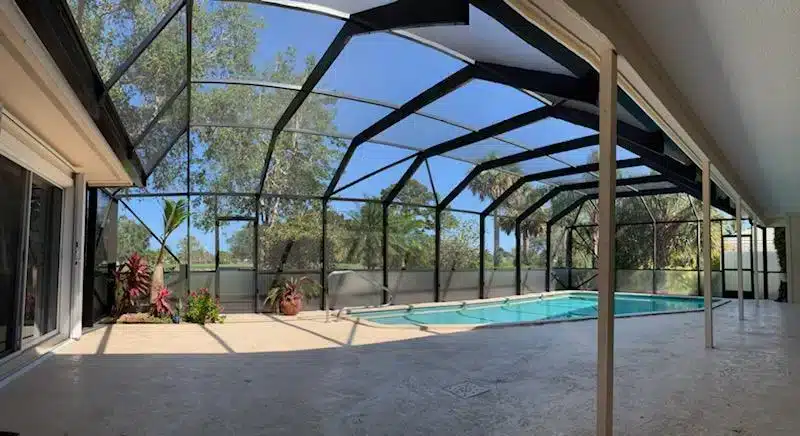
If you look at your enclosure and see rust stains, you are looking at a structural red flag. Most original pool cages were built using zinc-plated steel screws. In the humid, salty air of Palm Beach County, these screws begin to corrode within 3 to 5 years.

Nylotec and Stainless Steel Fasteners
During restoration, we don’t just paint over the rust (which would only hide the problem). We remove the failing hardware and replace it with Nylotec or 304/316 Grade Stainless Steel fasteners.
Nylotec Fasteners: These feature a nylon head that never rusts and can be color-matched to your frame.
Structural Integrity: During a hurricane, the strength of your enclosure isn’t in the aluminum—it’s in the connections. New fasteners ensure your cage meets the wind-load requirements of the Florida Building Code.
Choosing the Right Screen Mesh for 2026
Once the frame is painted and the bolts are replaced, the final step is the mesh. In 2026, homeowners have more options than ever, allowing you to customize your outdoor experience.
Standard vs. Specialty Mesh
Phifer 18/14 Mesh: The industry standard, offering great visibility and airflow.
No-See-Um Mesh (20/20): A tighter weave designed specifically for the tiny biting gnats common in Jupiter and Tequesta.
PetScreen: If you have dogs or cats, this vinyl-coated polyester is 7x stronger than standard mesh and can withstand claws and “jumpers.”
Solar Screen: Blocks up to 90% of the sun’s heat, significantly cooling down your pool deck during those brutal July afternoons.
Deciding Between Restoration and Total Replacement
For many homeowners in South Florida, the choice between restoring an existing structure or starting over with a new installation is the most critical decision of the project. While the financial aspect is a significant driver, the decision often comes down to the structural health of your aluminum and your long-term goals for the property.
Standard vs. Specialty Mesh
A professional restoration is designed to provide a “second life” for your pool cage. By removing the oxidation that eats away at the aluminum and replacing the failing fasteners that cause structural instability, you are essentially hitting the “reset” button on the structure’s lifespan.
When performed by specialists like AAA Pro Screening, a restored enclosure can provide another 10 to 15 years of service. In contrast, a full replacement is often only necessary if the main structural beams have been bent or compromised by hurricane-force winds, or if you are looking to completely change the architectural footprint of your outdoor space.
Time Efficiency and Project Turnaround
One of the most overlooked advantages of restoration over replacement is the timeline. Because a restoration utilizes the existing structure, the process is significantly more streamlined:
No Engineering Delays: A new build requires weeks of architectural drawings and municipal permitting through local building departments in Palm Beach or Broward County. Restoration usually bypasses this bureaucratic hurdle.
Rapid Transformation: While a new installation can keep your backyard a construction zone for weeks, a full restoration—including painting and rescreening—is typically completed in a matter of days.
Minimal Landscape Impact: Replacing an entire enclosure often requires heavy equipment that can damage pavers, turf, and tropical landscaping. Restoration is a much “gentler” process for your property.
The Environmental Benefit of Refurbishing
In 2026, many South Florida homeowners are prioritizing sustainability. Restoring your enclosure is an eco-friendly choice that keeps massive amounts of aluminum out of local landfills. Aluminum is a high-energy material to produce; by refurbishing what you already have, you are reducing the carbon footprint of your home improvement project while still achieving that “factory-new” aesthetic.
Understanding the Florida Building Code (HVHZ)
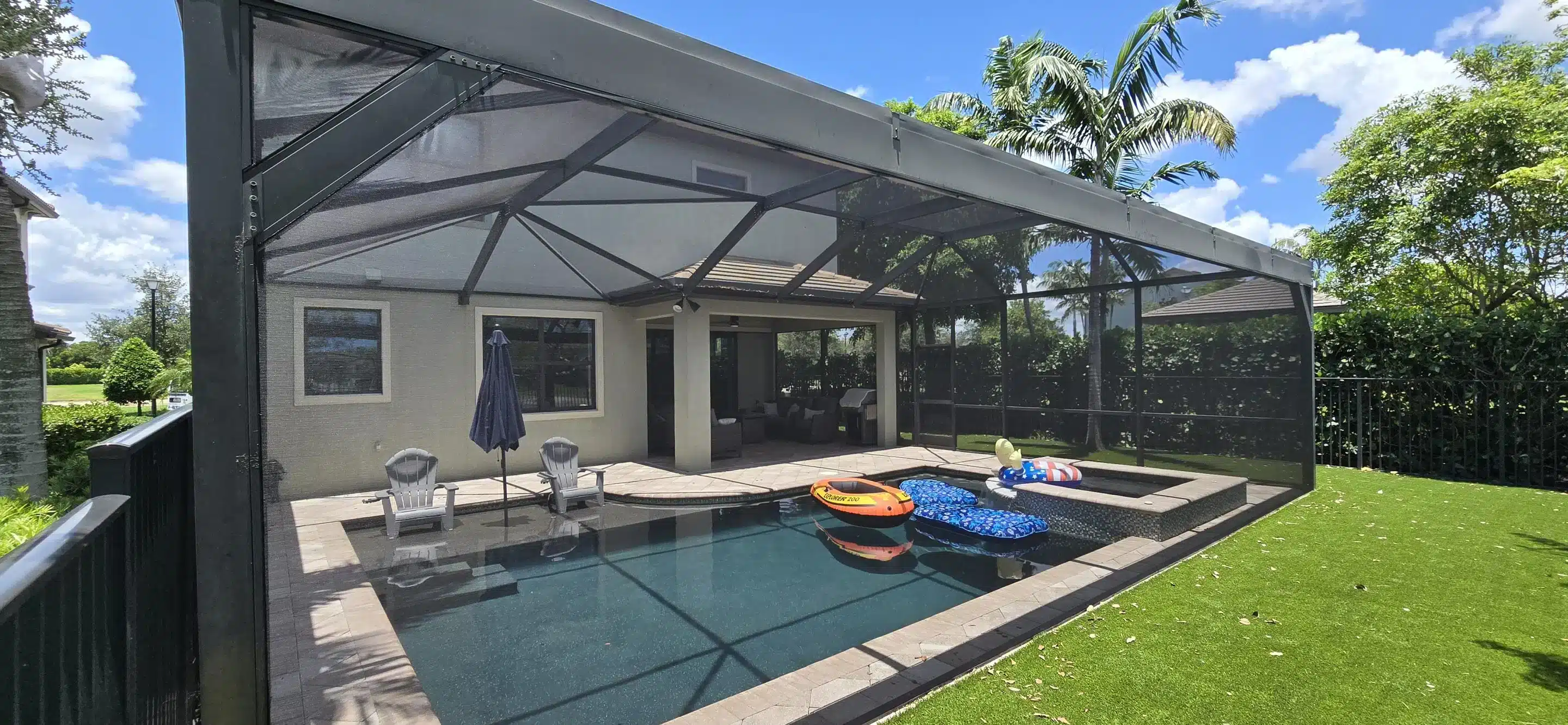
If you live in Miami-Dade or Broward County, your enclosure is located in a High-Velocity Hurricane Zone (HVHZ). This means your structure is subject to some of the strictest building codes in the world.
A restoration is the perfect time to “up-code” your structure. By adding internal gusset plates or extra K-bracing during the restoration process, we can often make an older enclosure significantly more wind-resistant without having to pull the complex permits required for a total rebuild.
Common Signs Your Enclosure Needs Restoration
Chalking: When you rub your hand against the metal and a white, powdery residue comes off.
Fading: The original bronze has turned a dull, grayish color.
Rust Stains: Orange streaks appearing at every joint or connection point.
Algae Growth: Green or black buildup that won’t come off with a standard garden hose.
Brittleness: The spline (the rubber cord) is popping out, or the screen tears with the slightest pressure.
The Importance of the Super Gutter
In many South Florida homes, the screen enclosure is attached to the house via a Super Gutter. This is a structural component that manages roof runoff. During a restoration, we pay special attention to the gutter’s seal and its attachment to the fascia. A leaking Super Gutter is the leading cause of wood rot in Florida lanais. We ensure the gutter is cleaned, resealed, and reinforced as part of our total care package.
Why Local Expertise Matters
Choosing a contractor for restoration requires a specialist. Many “general” screen guys will offer to paint your cage with a brush or a roller—do not let them. This will ruin the aluminum and peel within months.
At AAA Pro Screening, we have spent nearly two decades mastering the nuances of aluminum finishes in the South Florida climate. We understand how the salt air in Boca Raton differs from the humidity in Wellington, and we adjust our coatings accordingly.
Conclusion: Investing in Your Home's Value
A faded, torn screen enclosure doesn’t just look bad; it lowers your property value and makes your pool area less enjoyable. Pool cage restoration is the most effective way to protect your investment, improve your home’s curb appeal, and ensure your outdoor space is ready for another decade of Florida sun.
Ready to transform your backyard? Contact AAA Pro Screening today for a free, no-obligation restoration estimate.
Call Us Today: (561) 577-9176
Address: 1429 Lakeview Drive, Lake Worth, FL 33461
Website: